
 Posts
Posts


Showing posts with label reviews. Show all posts
Showing posts with label reviews. Show all posts
Thursday, September 28, 2017
The Song of Achilles by Madeline Miller
Just finished reading The Song of Achilles by Madeline Miller this month. After reading some reviews on Barnes & Noble, I thought that I would post some thoughts here.
The theme of the story is Patroclus' relationship with Achilles and is told from Patroclus' point of view. We are given a behind the scene glimpse as to how they came to know each other during their youth, how they grew up together and their relationship during the Trojan War. This story plays upon the things that we know about from Homer's Illiad while enrichening the story with the details not included in the original. However, there is a surprising twist. Patroclus and Achilles are more than best friends, they are lovers. Unlike some of the Barnes & Noble reviewers, I was not put off by the homosexual element and thought that it only helped to reinforce their bond and show why Achilles was so distraught over Patroclus' death. The story ends with Thetis, she who hated Patroclus with a passion throughout the book, giving satisfaction to Patroclus by allowing him to be reunited with Achilles after his death. Strangely enough, she doesn't hate him because he is the reason Achilles dies. She doesn't even associate Patroclus with his death - Hector has that honor. Hector kills Patroclus, but she does not foretell that Hector will kill him.
Another twist is that the story about Achilles' vulnerable heel is entirely absent from The Song of Achilles and instead he dies with an arrow to his heart. The heel is mentioned in the character list, in Achilles' description as a variation to the story. I feel that this is one of the more well known themes in The Illiad that readers would look for and it was strange to leave it out.
Patroclus' voice as a lost soul continues to tell the story even after his death. It is interesting though that we do not hear anything of Achilles' voice. Patroclus tells us of Achilles conquers during the war and his grief and death wish. But when their ashes were mingled, interestingly Patroclus does not feel Achilles' presence.It is not until Thetis carves his name next to Achilles does he reunite with Achilles in the underworld and the souls are put to peace. At that point, there is no dialog but a feeling of extreme contentment and happiness when the two shades finally reunite.
I'm glad that the two are reunited at the end, but I found the last chapter a bit unsatisfying. Although the reason is never explained, Thetis hates him with a passion throughout the entire story . However, in the end, when he reminds Thetis of Achilles' life and that he was not just a killing machine, but also a human does she relent. It doesn't make sense that she shows Patroclus a bit of mercy at the end since she was always portrayed as a cold person. It just seems like an easy way to end the story.
As with any love story, there are a lot of emotions in this book. Fear of losing a loved one, both from Thetis' and Patroclus' perspective. Thetis fears her son's death and hides him with King Lycomedes on Scyros. Patroclus reluctance to go to war knowing that Hector's death will lead to Achille's own death.
The writing style was casual and easy to read. The story was interesting, but not grippingly so. I enjoyed reading about their relationship, but there was not much more to the story apart from that. I tend to like really descriptive books that immerse the reader in their world with rich detailed environments. This book was lacking in that quality. There were descriptions of the sea and the war, yes, but it wasn't quite immersive as some of the other books I've read.
I picked up the book during a Barnes & Noble nook special during LGBT Pride Month in June, so I had a suspicion that there were some homosexuality between Achilles and Patroclus in the story. However, I remembered that I liked The Iliad during my college days (my favorite translation being that of Robert Fitzgerald) and thought it might be interesting to reread through a different perspective. This was a good story and I'm glad that I read it. I rate it a 3 out of 5 for being a good story with a novel twist as well as a quick and easy read. If it was a bit more suspenseful in more of an "I-can't-put-this-book-down" kind of way, I probably would have given it a 4.


Tuesday, June 10, 2014
Completed: Brain Rules (Updated and Expanded): 12 Principles for Surviving and Thriving at Work, Home, and School
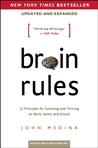
Brain Rules (Updated and Expanded): 12 Principles for Surviving and Thriving at Work, Home, and School by John Medina
My rating: 5 of 5 stars
This is a wonderful and fascinating book about your brain, how it works and how to get the most out of it. It is a great read for teachers and students alike, although it can benefit others too.
The contents are based on scientific research, but John Medina is a very skilled writer who presents the information in a fun, yet informative and interesting way. I enjoyed every chapter. :)
View all my reviews
Monday, September 2, 2013
The Historian's Toolbox -- Book Review
A Student's Guide to the Theory and Craft of History
Third Edition
Robert C. Williams
M.E. Sharpe, Armonk, New York
2012
I finished The Historian's Toolbox and am very happy to say that I really liked it. The conversational tone of the book and the very interesting examples used ensured that it was never a dull read. The topics are carefully organized by sections and subsections and discuss various aspects of doing history from the types of history that can be found, writing a paper, the various evidences that can be used to support a claim, the different ways that history can be told, to how history is still relevant today.
It is a handy reference book since the sections are broken down into subsections by logical sequence. The easy to follow layout makes it simple to look up specific topics. Although short, each section is concise, yet informative. Many topics are covered, but the pace of the book is quick due to the straightforward writing style.
In addition, The Historian's Toolbox can also be used as a textbook in the classroom. Historical examples are used to illustrate the current topic which helps to reinforce the relevance of the topic under discussion. There are also some black and white pictures to enhance the story. A few of them are a little fuzzy, but they are clear enough to get the point across. Some of the sections end with a "Task." These tasks consist of questions or exercises designed to review the topic discussed. They are great starting points for class discussions and exercise critical thinking skills. In addition, there are plenty of books recommended for further reading, in case the reader's interest is piqued by the examples used.
Monday, August 5, 2013
Trying to Become Better at History
I was excited to receive Robert C. Williams' The Historian's Toolbox: A Student's Guide to the Theory and Craft of History in my mailbox this weekend. I am hoping that it can help me better understand the process of doing history and what being a historian is all about.
Another good book that I just finished is How to Write A Lot: A Practical Guide to Productive Academic Writing, written by Paul J. Silvia, PhD. He makes references to the field of psychology, but his advice can also be applied to other fields, including the liberal arts. I enjoyed his engaging down-to-earth writing style and greatly appreciated the informative section about academic writing for different end products — for example, journals, reviews and books — since they gave me better understanding of what goes into them and what to expect if I decide to write for an academic audience.
Subscribe to:
Posts (Atom)